Blog
Welcome


Recent posts
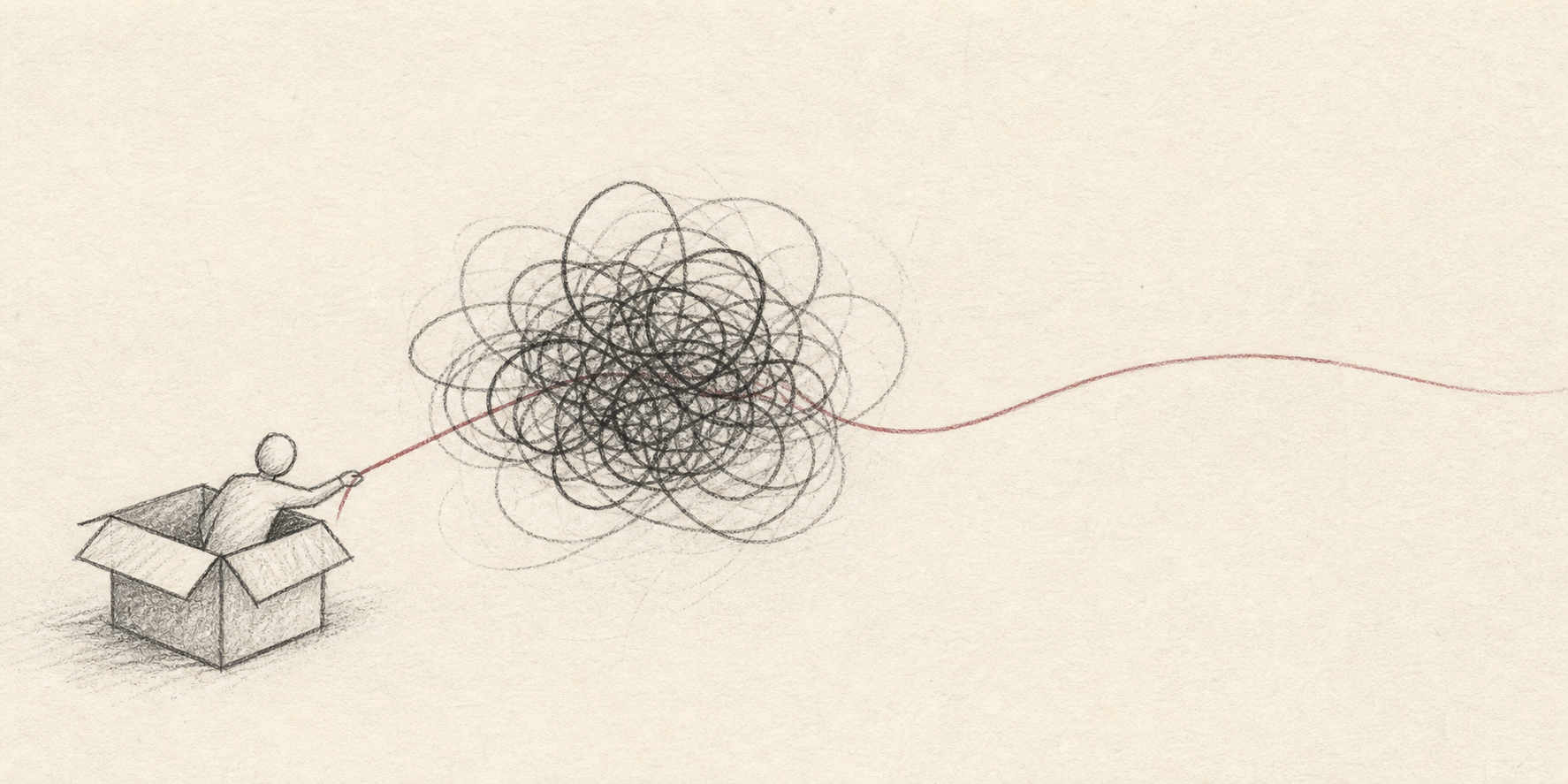
The other day, I found myself asking someone to help me find a big box. I wanted to climb into it for the next six months, have them throw food through a hole, and not emerge until the elections were over. Both of them, local and overseas.
I'm not proud of that impulse. But there it was.
The reason wasn't complicated. I couldn't stomach watching another election where politicians seemed genuinely tone deaf to what's actually happening.
And look, I know how that sounds, I'm the guy who usually argues for optimism, who tries to get people to see the bright side, who genuinely believes most humans aren't evil and want to do better. So when I'm the one asking for a box, maybe that tells you something about the state of things.
But here's the thing. The frustration isn't actually about the politicians themselves. It's not about whoever promises three free doctor visits and thinks that solves a cost-of-living crisis. It's not even about rates increasing faster than families can absorb them while councils shrug and say "infrastructure costs money."
It's deeper than that.
What's actually eating at me is that we've built systems, government, banking, corporate structures, all of it, where good people can do genuinely harmful things and never have to look the person in the eye. We've optimized ourselves into a place where complexity has become a smokescreen. Where you can't get a straight answer because there's no one person who can give you one. Where the handshake, the conversation, the human agreement to work something out together, that's basically gone.
My grandfather was in local government. A farmer, seriously principled, got involved because he actually wanted to improve things for the people he represented. I believed him. I believed that was possible.
But I'm watching that kind of integrity get buried under process. Under "the rules." Under layers of bureaucracy that let institutions claim they're just following protocol while real people get crushed by the machinery.
My great-grandparents bought a piece of land and dragged a shed onto it. They lived in that shed. I know, most of us can't imagine doing that now. But they lived within their means and created something. Over their lifetime, they built a house around that shed, room by room, as they could afford it. That house still stands. It's probably better built than most modern houses, and they did it incrementally, without destroying themselves financially.
That's what happens when you build within your means.
Now we have a system that everyone says is better, better quality housing, better protection, better standards. And sure, I understand the logic. Less mold. Safer structures. Better for people. But most young people can't afford modern houses without totally indebting themselves for probably their whole lives. And the rules don't allow them to do what my great-grandparents did. They can't start small. They can't build incrementally. They can't even try.
The choice has been taken away. And we've convinced ourselves that's progress.
Here's what scares me: I can't tell anymore if this is happening by accident, a side effect of systems that grew too big and complex, or by design. Either way, the cost is the same.
We've created a world where the system has more agency than the people in it. Where a young person can't build a future the way previous generations could. Where a caseworker can't deviate from a rule even when the rule breaks the human situation in front of them. Where a government department can rack up penalties so punitive that recovery becomes impossible, and they can rationalize it as "just collecting what's owed."
And maybe the weirdest part? We've convinced ourselves this is fair. Progress, even.
I don't think the system is unfixable. I'm not ready for that box yet. But I do think it starts with people like you and me actually noticing what's happening. Asking questions that feel simple but somehow have become radical: Does this add up? Is this actually serving the people it's supposed to serve? Or have we just gotten so used to complexity that we've stopped asking why things cost ten times what they should, why straightforward problems take six months to solve, why nobody can give you a straight answer?
Your corner might be different from mine. You might be inside one of these systems, or you might be outside getting crushed by one. But I'd bet you've seen it too, the moment where things stopped making sense but everyone acted like they did.
That's where I think the shift starts. Not with some grand fix. But with people who are willing to look at what's actually happening and say: "Yeah, this doesn't work anymore. We can do better than this."
My grandfather would've agreed with that. And maybe that's worth climbing out of the box for. Even if all we're doing is asking the right questions.
Because at some point, you have to wonder, is the compounding cost of stupidity something we can actually afford anymore?
DISCLOSURE
I’ve joked for much of my adult life that if I’m going to hell, it’ll probably be for my spelling, grammar, and proofreading.
I’m not diagnosed, but I’m fairly sure I have some level of dyslexia, so yes, I use AI to help with my writing. While I write about things based on deep and varied life experience and ongoing study, the thoughts are my own, I do use AI to check my thinking and to help tidy up what I’ve written ... if you like a virtual editor. Trust me it's as much for you as it is for me :-)
I don’t like AI slop either, so while this writing is mostly for myself, I hope you find some value in it too.
This entry was posted in Has My Attention by Stephen Baugh