Blog
Welcome


Recent posts

Don’t just sit there! Do something!
Over the years I’ve been and done many things. Everyone has. In my case, I’ve been a Xerox salesman, a volunteer firefighter, and a successful entrepreneur. Believe it or not, all these seemingly unrelated personas had at least one thing in common, what I’m going to talk about today, and that is:
A bias toward action.
What do I mean by this? I mean, if there’s a choice between sitting in a conference room planning what I’m going to do, and getting out there and doing it, I hope that I choose action. This is not to knock planning, discussion, and consensus-building. Believe me, I’ve done my share of those. I know that you can’t reach your goals unless you take some time to define them and plan how to reach them. What I mean is, there comes a time when you need to stop planning, talking, thinking, dreaming, and get out there and make it happen. And, too often people use the excuse of planning or researching to keep themselves from taking needed action.
They confuse planning how to do the job with the real job itself.
As a salesman, my “real” job was not to sit at my local Xerox office and plan to call on clients; it was to get out there and make the calls. And can you imagine if a volunteer firefighter arrived at the scene of a blazing building, sat down and whipped out his laptop, and began to develop a keen Powerpoint presentation about how best to put out the flames?
Good Enough
No, there comes a point when your plans are good enough; a point when it’s time to get out into the real world, and make your plan a reality. So whether you’re just starting a business, or you are developing and online business strategy to extend your brand equity, you’re going to have to take action. I know it can be overwhelming at times. You realise just how much you’ll need to do to succeed, and it can freeze you up so you can’t take that first step. The thing to do is try not to think about all the tasks you’ll need to do, and concentrate instead on just doing one thing, no matter how small. Take one baby step toward realising your goals, and you’ll get a boost of confidence and energy. You can use that enthusiasm towards taking your next baby step, and so on. Just do something. And then do another something. And before you know it, you’ll realise all those baby steps added up to that proverbial journey of a thousand miles, and your goal is within reach.

WHY YOU NEED TO MANAGE YOUR PERSONAL BRAND
Something that’s been on my mind lately is the desire to help people succeed in business online. No, I know I don’t have all the answers. But over the years, our two global companies have discovered some answers that work for us, and perhaps they’ll work for your company as well. As always, take what you like and leave the rest!
Why you need to manage your personal brand
Something that’s been on my mind lately is the desire to help people succeed in business online. No, I know I don’t have all the answers. But over the years, our two global companies have discovered some answers that work for us, and perhaps they’ll work for your company as well. As always, take what you like and leave the rest!
To begin with, let’s talk about branding.
The fact is, everyone has a personal brand – whether they know it or not. And the internet is a powerful multiplier. It enables people from around the world to develop opinions about you. It’s important to manage your personal brand so that the message others get about you is the one you want them to hear.
What is a brand?
Many people think of branding as something done by an advertising firm, or at most the marketing department. But in fact the entire enterprise is involved in the development of its brand image. Why? Because every experience the customer has with that firm, from ordering to paying to product quality and service after the sale, contributes to the brand image that customer carries around with him. A brand is everything that a person thinks or feels or believes about the branded item. The brand is influenced by the person’s past experience with the item, what other people say about it and what they can conclude about the brand from the messages it sends out. (Okay, I said “item” there, but you realise that this could be a company or an individual or a service – not just a solid object.) Let’s take Queensberry as an example, since that’s a brand I know from the inside out. When our photographer clients, or their clients, think about a Queensberry photo album, what comes to mind?

Here are some of the things I would hope they’d associate with the Queensberry brand: Established. Trustworthy. Genuine. Authentic. High-quality. Artful design. Emotionally connected. Memories made real. Memories to last a lifetime. Now suppose we decided to cut costs by using a lower grade of paper. Or suppose that we delivered 80% of our orders after the promised date. Would our brand continue to convey “premium quality”? “Trustworthy”? Probably not. (Which is why we’ll never do those two things.) And as you can see, neither of those two hypothetical decisions would have been made by the marketing department. One of them would have been made by purchasing, and the other is the result of a flawed production process. The entire company contributes to the brand image.
So why do you need a personal brand?
Well, as I said before, you already have one. It’s called your reputation. Your track record.
The real question is, does your reputation match the reality?
Does your real reputation match what you want it to be? Have your “customers” – the people who interact with you,who might hire you and so on – been getting the messages you want them to hear about you?

As a personal example, let’s say you’ve applied for a new job. Your resumé is a carefully crafted marketing tool that, in the best-case scenario, sends exactly the message you want to convey, and nothing else. Just like the advertising developed by a firm’s marketing department and ad agency. But remember, it’s not just your resumé – your personal marketing department, if you will – that sends out the messages about you. There’s also how you dress for the interview, your phone manners before and after, whether you’re late or not, whether you’ve been indiscreet on your blog or FaceBook page, and so on – any one of which may send a message undermining your carefully-prepared resumé.
Before you take your business online, carefully consider how you’re going to manage your brand.
To take your business online successfully, you need to establish yourself as an expert. Establishing a strong personal brand of your own will help you get the word out about your company. I’ll cover exactly how this works in later posts.
 I'd like to think that I am more of a Greenie than some of the Greenies I know, so here is the good business stuff you can learn from the environmental movement. Only a little is about being green, and for some this might be only about the profit baby :-)
 I don't believe it's right to assume business is anti-environment, although our track track record could be better.
But what we can learn from our environmental friends is that our environment is a reflection of us ... a reflection of our choices ... a reflection of our behavior and most importantly a reflection of our values and focus. Not the values we talk about to feel good, but the ones we live by day to day. Our environment says more about us than our words will ever say.And similarly your business is a reflection of you.
Like it or not, excuses don't cut it ... Your business is a reflection of you. If things are a mess, it's because of how you show up. If things are disorganized then it's because you have not been focused. Not only do you get what you tolerate, you also get what you dream of.So here is a list of seven things a lucky person could learn from a Greenie.
Take them to heart and your business will love you for it.#1 Because we can doesn't mean we should
Life is about choices, and just because we can do something doesn't mean we should. In just the same way as cutting down rain forests might provide immediate jobs and cheap timber, sometimes we need to take the high road and just do what is right. Leadership is not about doing what's easy it's about doing what's needed.#2 Why so much waste?
Many business owners still haven't learned that it's often not just environmentally but also financially good to reduce waste in business. To many it seems hard, and therefore we put progress off until tomorrow, but reducing waste can be as easy as not buying something in the first place. Until my good friend Alkesh taught me a very special lesson. His food bill for a week was a third of ours. We didn't value food as he did and therefore threw so much in the rubbish bin. His lesson was that ... god is in everything ... food is god ... to waste food is to disrespect god. Maybe there is a 'god of profit' in everything. It might refocus things if you started to think you were dishonoring the 'profit god' just by buying unnecessary things or throwing stuff in the rubbish.#3 The future is important too
I am so frustrated with executive remuneration around the world. If any one thing has brought this recession about it is the personal greed and 'gaming the system' that has come from remuneration schemes that reward employees for today, without a view of tomorrow. We must, must, must start to have 3, 5, 10, 100 year views of our business if they are to be strong, leadership-based and powerful long term. We need multi generational business. We must find a way to allow businesses to do what is 'right' even if it brings a small dip profit today. Anything else leads to companies being scuttled from within to extract short term value, rather than building value and strength for the future.#4 Burning is not good!
You don't hear this so much anymore, but a guaranteed way to lose my respect is to tell me some version of your 'burn rate story'. Telling me how you are going to be losing money for five years while you capture a market is usually complete stupidity, and a waste of resources. Tell me how you are going to give me a return on every dollar spent and I'll be impressed. Words like "above and below the line" must die. Of course nothing can guaranteed a return, and sometimes it's difficult to show exactly how a customer was won, but we need to stop pretending it doesn't matter if a promotion has measurable value. Anything else is waste.#5 Are you proud?
Probably pride more than anything else motivates a Greenie ... that is, that they want to be proud of how they did their bit. Did they make good choices and lead by example? Business should be no different. Are you proud of the long term legacy you will leave ... is it sustainable, do you think the grand kids will also be excited and proud? We believe that life is short, and we need to be proud. For us there is a set of measures every decision must go through. This is so simple but also so very very powerful. Does 'x' fit with ... WHAT we want to do ... HOW we want to do it ... and WHO we want to do it with?#6 It's cool to nuture
I don't know why we get caught up with nurturing being too feminine ... a sign of weakness or a potential to be compromised. Sorry but that's BS ... It's much harder to do what's right, run a tight ship and care for people, but that's why it's called leadership.#7 Being green isn't a word, it's a way of life
I don't mean to sound like I am taking some moral high ground with this, I'm not. Your life is your life and as far as it doesn't effect me, I'm not going to judge. I do however feel that following the points above is a great way to feel good. It's not about having something clever to say at a dinner party, it's about doing what's right and common sense. I promise that the more you do this, the more open and transparent that you and your business are, the better you will be. It's fun, and while it makes you smile inside it is also good for the bottom line.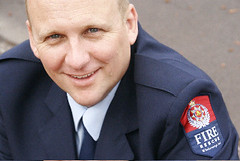 I was listening to a commentator today on National Radio talking about how the manufacturing sector, and especially exporters in New Zealand were in a really bad way. That doesn't apply to us, but he did help me remember three things about why I came back from Australia to help grow Queensberry. It's her 40th birthday next month, and while she has changed beyond belief these past 10 years she grows up next month.
 I returned for ...
Passion
I came back to be part of some thing much bigger than myself. I have been passionate about this industry since I was a child and love photography, love weddings and love the creative people we work with. Queensberry is an aspirational brand.
The challenge
At the time I returned in 1996, New Zealand was suffering from a 'brain drain'. So many of our young people, like myself, had left or were leaving because they thought there was no real chance of great opportunity in New Zealand. They were pursuing jobs that paid by the pound (GBP), and exploring the world through their OE. Student loans meant many had no desire to come back. I wanted to come back and prove them wrong ... create a business model that was unique and then take on the world. We built intellectual property, and differentiate through design.
A spiritual connection with the land
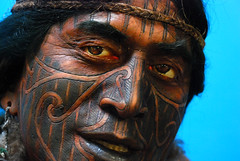
I am often frustrated when I hear some New Zealand Maori talk about their spiritual connection with New Zealand as if it is only them that have this connection, and imply that because I am not Maori that somehow my connection is less. The truth is I pine for New Zealand when I am away, and miss it as much as I do my family if I am away for to long. We are however blessed with being so connected with the world. We try to act locally in each market but have a global focus. Travel is great, and this life allows us the benefit of both worlds.
A story told through photographs.
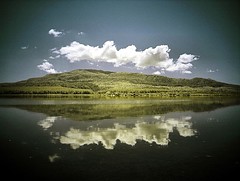
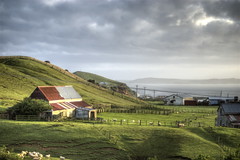
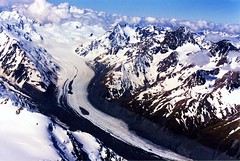
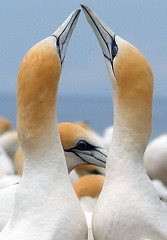
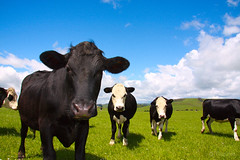
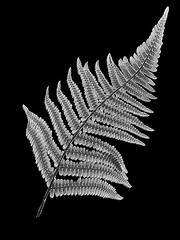
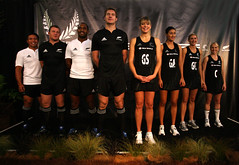
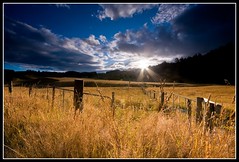
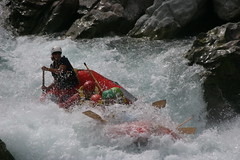
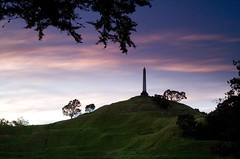
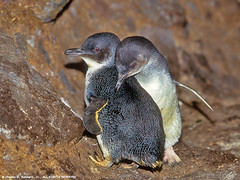
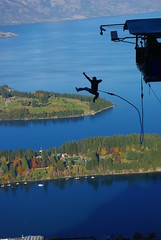
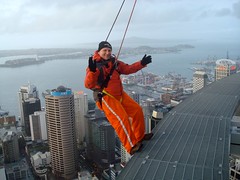
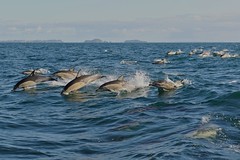
It is only fitting therefore that I should share a little of my beautiful country through photos. I found these on flickr. This is our land. I thank the photographers that took these images and have retained the links so if you click on any photo and go through to the photographers flickr page and find more of their story... enjoy.New Zealand, a land of beauty, love and adventure